Kaillou

How to Tell if a Rock Is Valuable
Most rocks you pick up on a walk aren’t worth much. But some are worth far more than you’d think, and the difference comes down to a few simple criteria. Here’s how to sort them out before you get your hopes up, or toss a great find. And before you pick one up, remember that the land belongs to someone. On private land, you need the owner’s permission. On public land, the rules depend on who manages it: the Bureau of Land Management generally allows collecting reasonable amounts for personal, noncommercial use, collecting is generally prohibited in national parks, and state lands have their own rules, which vary by state. When in doubt, check with the land manager.
Start by Finding Out What the Stone Is
It all starts with the stone’s name: that’s what tells you what to compare it with. A limestone pebble and a piece of amethyst have nothing in common, even at the same size. So before talking price, you need to identify the stone: by its color, hardness, luster, and shape, or with an app like Kaillou, which suggests an identification from a photo.

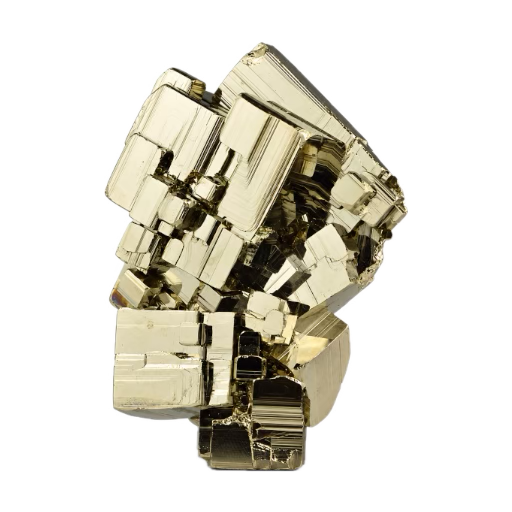
Don’t trust appearances: what shines isn’t necessarily what’s valuable. Pyrite, nicknamed “fool’s gold,” has the color and luster of gold, but not its value: it’s a common mineral.
The Four Criteria That Set the Price
How rare the stone is. Quartz is everywhere; fine rubies are rare. Rarity matters a lot, but a specimen’s quality, condition, and provenance can change its value completely.
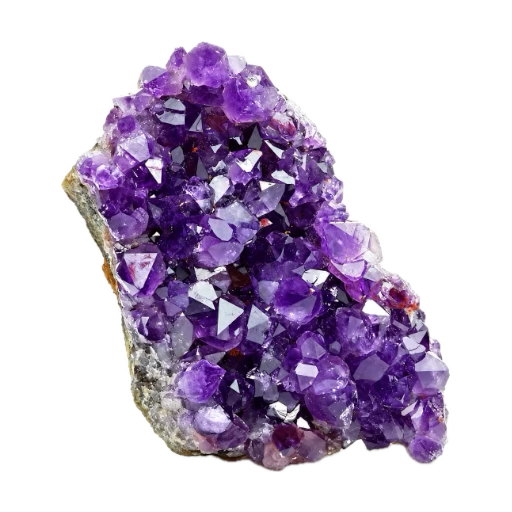
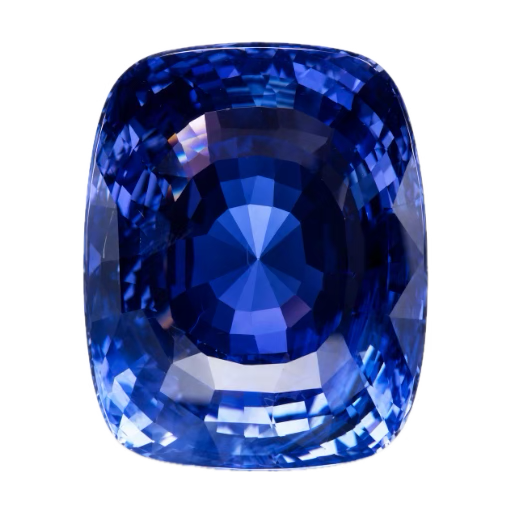
The quality of the specimen. For a transparent gemstone, color, transparency, and the absence of fractures set the price. An amethyst with a rich purple color that isn’t too dark is more sought after than a pale one, and a sapphire with a pure blue color more than a grayish one.
Size. A big piece is generally worth more than a small one, but not always proportionally, and it depends on the stone. For a fine ruby, the price per carat climbs steeply with size. For amethyst, it rises only a little: it’s easy to find in large sizes.
Shape. Within the same species, collectors look for well-formed, intact crystals rather than a shapeless chunk. A cut stone is sold by the carat, a unit equal to 0.2 gram.
What a Rock You Found Is Really Worth
Let’s be honest: a white quartz pebble or a chunk of granite is hard to sell on its own. The prices dealers list are for selected, prepared specimens: they don’t tell you what your find is worth.
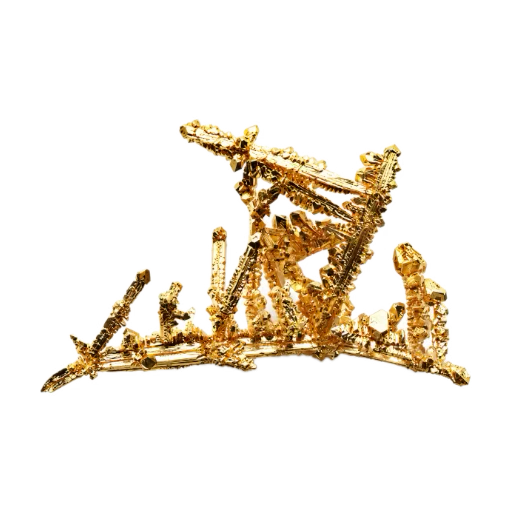
A few cases stand out. Gold sells by its fine-gold weight, at the day’s price: a few flakes brought back from a river are often worth more as a keepsake than on resale. A meteorite can have real value, especially once a laboratory has authenticated it and the Meteoritical Society has given it an official name: without authentication, it’s worth little on the collectors’ market.
Three Simple Tests
These tests prove nothing on their own, but they quickly rule out false leads. Do them on an inconspicuous edge, never on a crystal face, and not at all on a find you want to keep intact.
- The glass test. Try to scratch a worthless piece of glass, laid flat, with an edge of the stone, without pressing hard: glass and its chips cut. Glass has a hardness of about 5.5 on the Mohs scale, which runs from 1 (talc) to 10 (diamond). Then rub with your finger: a streak of powder wipes off, a real scratch stays. If the stone scratches the glass, it’s at least as hard as glass, like quartz (7). If not, it’s probably softer, like calcite (3).
- The weight test. Heft it next to an ordinary stone of the same size. An unusually heavy stone may contain metal.
- The magnet test. If you suspect a meteorite, don’t bring any magnet near it: a magnet erases part of its magnetic memory, which is valuable to researchers. Use a compass instead and see whether the needle moves. For any other stone, use a small ordinary magnet, not a neodymium magnet, which attracts plenty of everyday rocks. A stone that clearly sticks contains iron, like magnetite, the most magnetic naturally occurring mineral.

“Precious Stone”: A Term to Use With Care
Traditionally, four gemstones are called precious stones: diamond, ruby, sapphire, and emerald. In the United States, the Federal Trade Commission’s Jewelry Guides explain how sellers can avoid misleading buyers. A man-made stone should be clearly labeled: “laboratory-grown ruby” or “laboratory-created ruby” only when it has essentially the same optical, physical, and chemical properties as ruby, and “imitation ruby” or “simulated ruby” for a look-alike. The qualifier should immediately precede the gem name, just as visibly; “faux” isn’t enough. Words like “natural,” “genuine,” “precious,” and “semi-precious” shouldn’t describe an artificial product. Sellers should also disclose a treatment when it isn’t permanent, when it calls for special care, or when it significantly affects the stone’s value. And the name isn’t everything: an opaque ruby doesn’t have the same sales prospects as a transparent one, while a fine transparent garnet can be cut and set in jewelry.
When to Ask an Expert
If your stone looks like a transparent gemstone, if it’s very heavy, or if it looks like a meteorite, don’t clean it and don’t break it. Write down where and when you found it, and take a photo. A gemologist, your state geological survey, a natural history museum, a university geology department, or a gem and mineral club can help you identify it or point you in the right direction, sometimes after testing. For a price, go to a professional who knows the market for that type of stone. For a possible meteorite, read how to tell if a rock is a meteorite.
Kaillou gives you a first benchmark: once the stone is identified, the Kaillou calculator estimates a price range based on its size and shape (how it works). It’s a ballpark figure, not an appraisal or a promise of resale: only a specialist who examines the stone can confirm what it is and what it’s worth.
Sources
- Some meteorite realities, Meteorite Identification, Washington University in St. Louis
- Pyrite, Wikipedia
- Mohs scale, Wikipedia
- Carat (mass), Wikipedia
- Gemstone, Wikipedia
- Guides for the Jewelry, Precious Metals, and Pewter Industries, 16 CFR Part 23, Federal Trade Commission, via the Legal Information Institute, Cornell Law School (sections 23.24, 23.25 and 23.27)
- Amethyst quality factors and Ruby quality factors, GIA
- Rockhounding on Public Lands, Bureau of Land Management
- Recreational Collection of Rocks and Minerals: Legal Instruments, National Park Service
- MGS Rockhounds, Michigan Geological Survey
- Can you identify my rock or mineral?, U.S. Geological Survey