Kaillou


Emerald
Emerald is the green variety of the mineral beryl, colored by traces of chromium or vanadium. It ranks among the most valued colored gemstones.
How to identify emerald
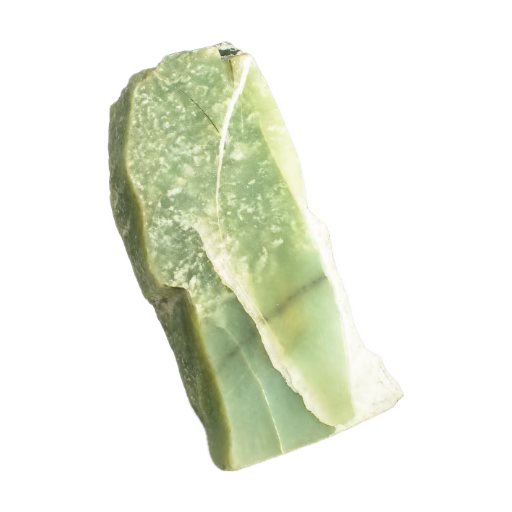
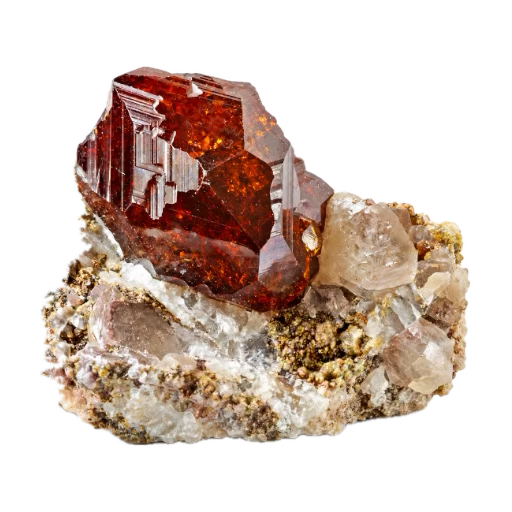
Rich green six-sided crystals with a glassy shine. Most stones contain cracks and mossy inclusions that gemologists call the garden. Paler green stones of the same mineral are called green beryl, not emerald.
Real or fake emerald: common imitations
- Glass and doublets
- Glass shows round bubbles. A doublet is a thin slice glued to a green layer, and the join is visible from the side.
- Synthetic emerald
- Looks cleaner than natural stones and often shows wispy, veil-like inclusions. A laboratory test is the safe way to tell.
How much is emerald worth?
At average quality, a walnut-sized rough piece (about 41 g) is worth $22 to $110; a 1 kg rough piece, $280 to $1,300; a 1-carat cut stone, $150 to $560.
| Specimen | Ordinary | Average | Fine |
|---|---|---|---|
| Rough piece, walnut-sizedabout 41 g | $8 to $33 | $22 to $110 | $83 to $380 |
| Rough piece, 1 kg | $110 to $430 | $280 to $1,300 | $1,000 to $4,800 |
| Crystal, egg-sizedabout 138 g | $38 to $230 | $130 to $1,000 | $770 to $5,800 |
| Cut stone, 1 carat0.2 g | $69 to $220 | $150 to $560 | $470 to $1,700 |
Ordinary quality: dull, opaque or chipped. Fine quality: vivid color, clean and translucent stone.
Color is the main factor determining price: a pure, vivid green, neither too dark nor too pale, is worth far more than a dull green. The “jardin” (the mossy-looking inclusions) is accepted, but a clearer stone commands a high price. Filling with oil or resin matters a lot: an untreated emerald, proven by a certificate, is rare. Colombian origin is sought after. A pale green beryl is not an emerald and is worth much less.
These figures are orders of magnitude from Kaillou’s calculator: an estimate, not an appraisal. For a piece that looks exceptional, ask a gemologist. How the calculator works.
Where to find emerald
In mica schist and in veins cutting black shale. Colombia is the classic source, with Muzo, Chivor and Coscuez as famous mines, and Zambia is the second largest producer.
France keeps some historic emeralds. The Muséum national d’histoire naturelle, in Paris, holds the emerald known as that of Saint Louis, a 51-carat cabochon that adorned the central fleur-de-lis of a royal crown kept in the treasury of Saint-Denis. The crown was destroyed during the Revolution, but the stone survived. The Mines Paris mineralogy museum also holds the emeralds of Napoléon III’s crown, probably Colombian.
Good to know
Cracks are usually filled with oil or resin. Heat, solvents and ultrasonic cleaners can damage the filling or break the stone.
Emerald history and lore
Egyptian mines near the Red Sea were worked in antiquity, mostly in Roman times. They faded once the rich Colombian deposits became known to Europeans.
Birthstone of May. Its name goes back to a Greek word for green gem.