Kaillou

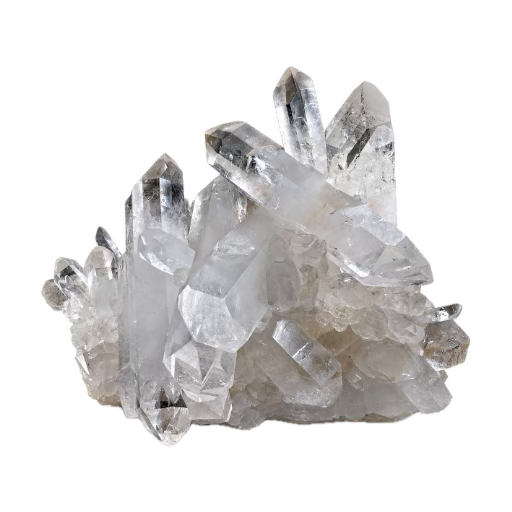
Quartz
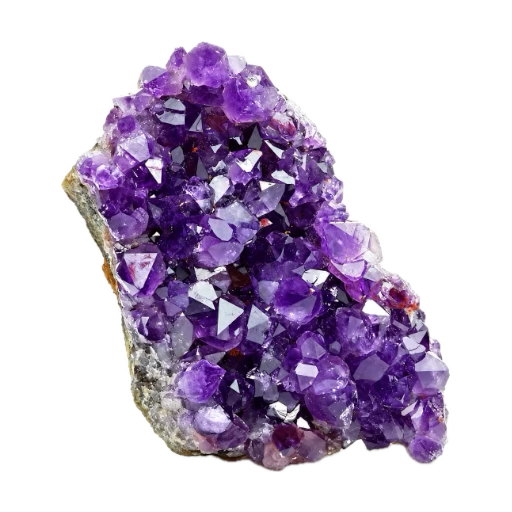
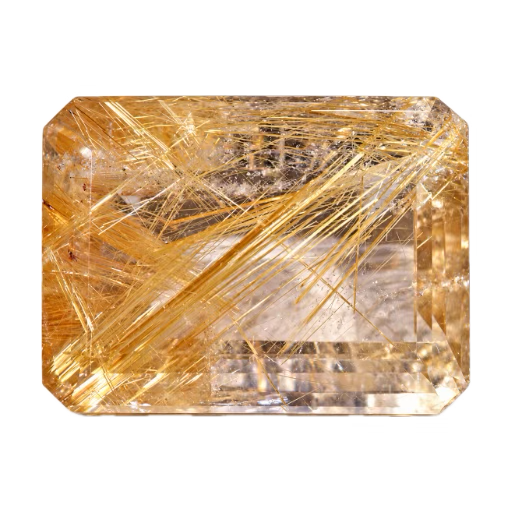
Quartz is silicon dioxide, one of the most abundant minerals of the Earth's crust. It occurs in many colored varieties, including amethyst, citrine, rose quartz and smoky quartz.
How to identify quartz
Glassy six-sided prisms ending in a point, or shapeless glassy lumps with a slightly greasy shine. It has no cleavage and breaks along curved surfaces. It scratches glass and steel, and a knife cannot scratch it.
Real or fake quartz: common imitations
- Glass
- May show round bubbles, and a quartz point scratches it.
- Heat-treated quartz
- Much of the citrine on sale is heated amethyst. A very even, deep orange-brown color is a hint.
- Dyed quartz
- Bright colors that gather in cracks suggest dye.
How much is quartz worth?
At average quality, a walnut-sized rough piece (about 40 g) is worth under $1; a 1 kg rough piece, $7 to $11; an egg-sized crystal (about 133 g), $3 to $9.
| Specimen | Ordinary | Average | Fine |
|---|---|---|---|
| Rough piece, walnut-sizedabout 40 g | under $1 | under $1 | $1 to $2 |
| Rough piece, 1 kg | $6 to $9 | $7 to $11 | $10 to $15 |
| Crystal, egg-sizedabout 133 g | $2 to $5 | $3 to $9 | $7 to $17 |
Ordinary quality: dull, opaque or chipped. Fine quality: vivid color, clean and translucent stone.
A rounded white quartz stone picked up outdoors finds no buyer: the prices in the table are those of specimens sold in shops. Everything depends on the crystals: clarity, intact points, size and origin. A well-formed piece from a known locality can interest a collector, while a crystal with chipped points quickly loses most of its value.
These figures are orders of magnitude from Kaillou’s calculator: an estimate, not an appraisal. For a piece that looks exceptional, ask a gemologist. How the calculator works.
Where to find quartz
In granite, pegmatites, mineral veins and geodes, and as loose grains in sand and river gravel. Brazil, Madagascar, the Swiss Alps and Arkansas are known for fine crystals.
In France, the finest crystals come mostly from the Mont Blanc massif and the Isère. Near Le Bourg-d’Oisans, the former La Gardette mine, abandoned in the early 20th century, supplied crystals found in many museums. It even gave its name to a twin, two crystals joined almost at right angles.
Good to know
Dust from cutting or grinding contains crystalline silica, which harms the lungs when breathed. Wet cutting keeps the dust down.
Quartz history and lore
In the 17th century, Nicolas Steno's measurements of crystal faces helped lay the foundations of crystallography. The Curie brothers found in 1880 that quartz produces an electric charge under pressure, a property later used in clocks and electronics.
The ancient Greeks and Romans believed rock crystal was ice frozen so hard that it could never melt. The belief lasted until at least the 17th century.