Kaillou


Tanzanite
Tanzanite is the blue to violet variety of zoisite, a calcium aluminum silicate mineral. Small amounts of vanadium cause its color, and nearly all rough is heated to bring out the blue.
How to identify tanzanite
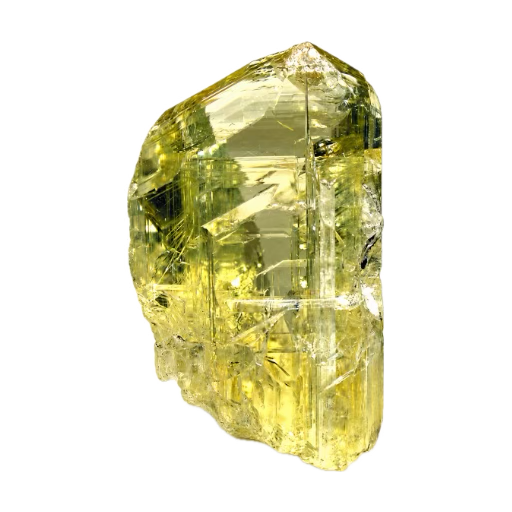
A transparent blue to violet stone that flashes blue, violet and reddish-brown depending on the viewing angle. Cut stones are usually small. It is softer than quartz.
Real or fake tanzanite: common imitations
- Synthetic forsterite
- A lab-made imitation with strongly doubled back edges, which tanzanite does not show.
- Iolite
- Also shifts color by angle, but looks grayer and less vivid.
- Glass or lab-made stones
- Show the same color from every angle and lack the shift of natural tanzanite.
How much is tanzanite worth?
At average quality, a walnut-sized rough piece (about 47 g) is worth $31 to $89; a 1 kg rough piece, $360 to $1,100; a 1-carat cut stone, $190 to $380.
| Specimen | Ordinary | Average | Fine |
|---|---|---|---|
| Rough piece, walnut-sizedabout 47 g | $16 to $41 | $31 to $89 | $77 to $220 |
| Rough piece, 1 kg | $180 to $470 | $360 to $1,100 | $890 to $2,600 |
| Crystal, egg-sizedabout 155 g | $69 to $270 | $180 to $850 | $690 to $3,300 |
| Cut stone, 1 carat0.2 g | $130 to $230 | $190 to $380 | $340 to $650 |
Ordinary quality: dull, opaque or chipped. Fine quality: vivid color, clean and translucent stone.
Color accounts for most of the price: the most sought after are an intense violet-blue, and the paler, more common shades are worth far less. The deepest colors are mostly seen beyond 5 carats. An inclusion visible to the eye lowers the price. Almost all are heated, which has little effect on the price. A colored coating, which wears at the edges, makes the stone much less desirable. A laboratory certificate describes the stone without guaranteeing a price.
These figures are orders of magnitude from Kaillou’s calculator: an estimate, not an appraisal. For a piece that looks exceptional, ask a gemologist. How the calculator works.
Where to find tanzanite
Only in the Mererani hills of northern Tanzania, near Mount Kilimanjaro, in a very small mining area.
Good to know
It can chip on a hard knock, and ultrasonic cleaners and sudden heat can damage it.
Tanzanite history and lore
Found in northern Tanzania in the 1960s, and introduced to the market in 1968 by Tiffany & Co., which gave it the name tanzanite. Blue zoisite was judged a poor trade name.
Added to the December birthstone list in 2002 by the American Gem Trade Association.