Kaillou

Iolite
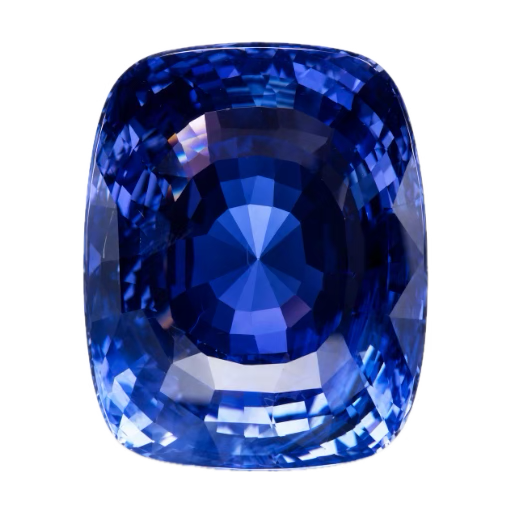
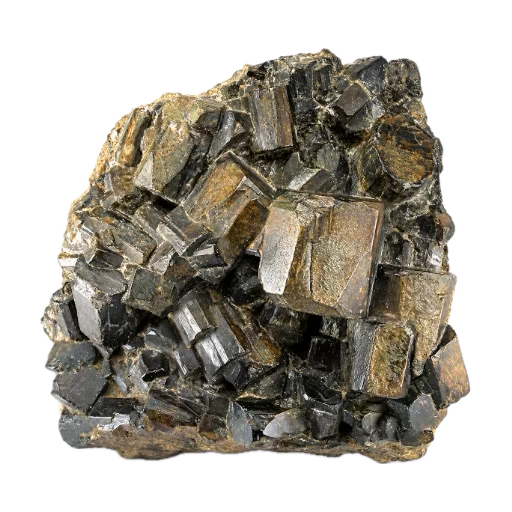
Iolite is the gem variety of cordierite, a magnesium iron aluminum silicate. It is known for a blue to violet color that changes when seen from different directions.
How to identify iolite
A transparent blue to violet-blue stone that looks blue from one angle and gray-yellow or almost colorless from another. It has a glassy shine and is about as hard as quartz.
Real or fake iolite: common imitations
How much is iolite worth?
At average quality, a walnut-sized rough piece (about 39 g) is worth $4 to $10; a 1 kg rough piece, $53 to $130; a 1-carat cut stone, $18 to $35.
| Specimen | Ordinary | Average | Fine |
|---|---|---|---|
| Rough piece, walnut-sizedabout 39 g | $2 to $5 | $4 to $10 | $8 to $20 |
| Rough piece, 1 kg | $31 to $67 | $53 to $130 | $110 to $270 |
| Crystal, egg-sizedabout 129 g | $10 to $34 | $23 to $92 | $77 to $310 |
| Cut stone, 1 carat0.2 g | $12 to $22 | $18 to $35 | $32 to $62 |
Ordinary quality: dull, opaque or chipped. Fine quality: vivid color, clean and translucent stone.
The price depends first on color: a violet-blue to a clear blue is the most sought after. Then come clarity, size and a well-oriented cut, because the color changes with the direction of the crystal. Fine stones of more than five carats are rare. Iolite is rarely treated. The trade name “water sapphire” is misleading: it is not a sapphire. A gray cordierite embedded in a rock has no gem value.
These figures are orders of magnitude from Kaillou’s calculator: an estimate, not an appraisal. For a piece that looks exceptional, ask a gemologist. How the calculator works.
Where to find iolite
In metamorphic rocks and in gem gravels. India, Sri Lanka, Myanmar, Madagascar, Tanzania and Brazil supply gem material.
The gem material comes from elsewhere, but cordierite, of which iolite is the gem variety, does occur in France. The Huelgoat granite, in the Finistère (Brittany), is known for its cordierite crystals, described in the early 19th century by Pierre Bigot de Morogues. Its rocks, a jumble of granite boulders, have been a listed site since October 26, 1910. Cordierite is also reported in the Haute-Loire, in a granite quarry at Vieille-Brioude, and in the Aveyron, at Cransac.
Iolite history
The French geologist Louis Cordier described the mineral in 1809 from specimens found in Spain, and it was named cordierite in his honor in 1813. The gem name iolite comes from a Greek word for violet.