Kaillou


Cubic zirconia
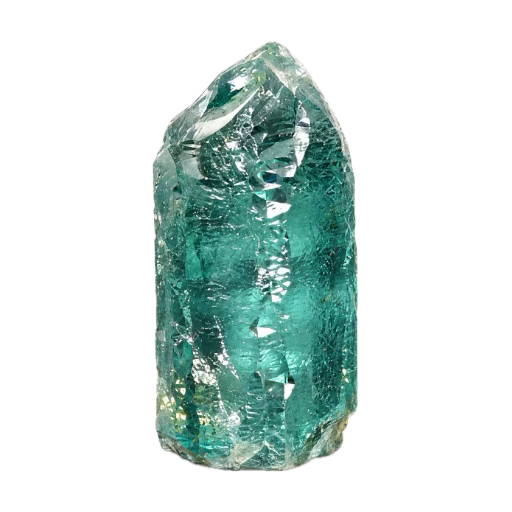
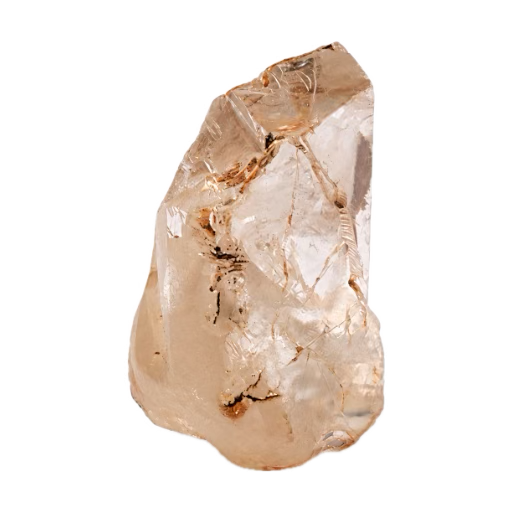
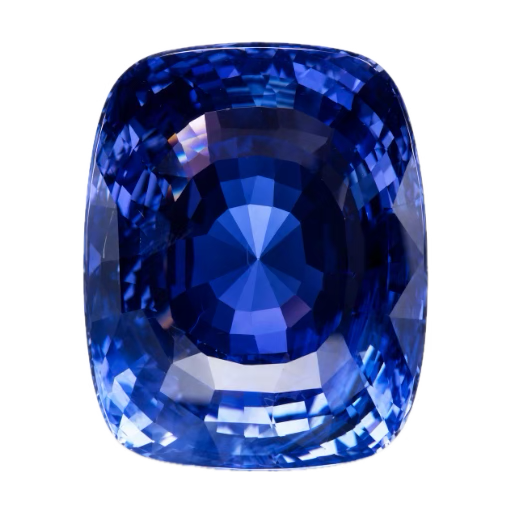
Cubic zirconia is a lab-grown crystal of zirconium dioxide, stabilized with yttrium or calcium oxide so that it keeps its cubic form. It is the most widespread imitation of diamond.
How to identify cubic zirconia
Colorless, flawless and very bright, with strong flashes of rainbow color. It is noticeably heavier than a diamond of the same size. It can also be made in many colors.
Real or fake cubic zirconia: common imitations
- Diamond
- Lighter for its size, with softer white flashes. Diamond moves heat away quickly, which cubic zirconia does not.
- Moissanite
- Another lab-made stone that looks similar. Seen at an angle through a side facet, its back edges appear doubled.
How much is cubic zirconia worth?
At average quality, a walnut-sized rough piece (about 84 g) is worth $3 to $7; a 1 kg rough piece, $27 to $50; a 1-carat cut stone, $1 to $4.
| Specimen | Ordinary | Average | Fine |
|---|---|---|---|
| Rough piece, walnut-sizedabout 84 g | $2 to $5 | $3 to $7 | $6 to $12 |
| Rough piece, 1 kg | $18 to $32 | $27 to $50 | $45 to $83 |
| Crystal, egg-sizedabout 280 g | $10 to $28 | $20 to $62 | $53 to $170 |
| Cut stone, 1 carat0.2 g | $1 to $2 | $1 to $4 | $2 to $7 |
Ordinary quality: dull, opaque or chipped. Fine quality: vivid color, clean and translucent stone.
Mass-produced, cubic zirconia does not resell: a single stone has no buyer. Differences in quality come down to the precision of the cut, the sharpness of the edges and the color. Iridescent coatings wear off over time. In a piece of jewelry, the price mostly comes from the metal of the setting. An inherited or found stone that “looks like a diamond” is often a cubic zirconia, which a jeweler can quickly tell apart.
These figures are orders of magnitude from Kaillou’s calculator: an estimate, not an appraisal. For a piece that looks exceptional, ask a gemologist. How the calculator works.
Where to find cubic zirconia
It is made in laboratories, not mined, and sold loose or set in jewelry worldwide.
Good to know
The facets can scratch and the surface can turn cloudy with long wear.
Cubic zirconia history
Soviet scientists developed the method for growing large crystals in the 1970s, and commercial production began in 1976. It became the main low-cost competitor of diamond.