Kaillou


Apatite
Apatite is a group of calcium phosphate minerals that contain fluorine, chlorine or hydroxide. Hydroxyapatite is also the main mineral in the teeth and bones of vertebrates.
How to identify apatite
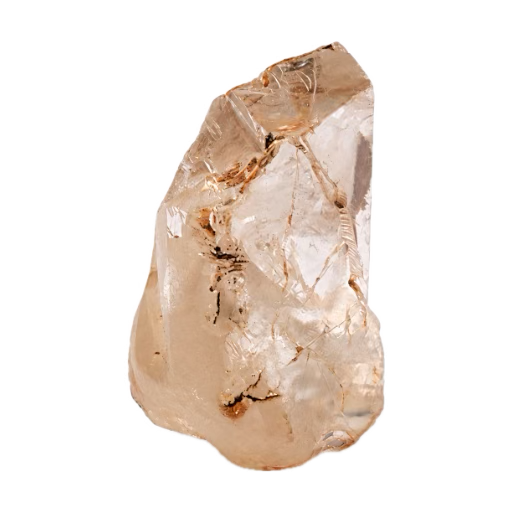
Six-sided glassy crystals, clear to translucent, most often green but also blue, yellow, violet or pink. A steel knife can just scratch it, which separates it from harder gems of similar color.
Real or fake apatite: common imitations
- Beryl and tourmaline
- Both look similar in green or blue but are much harder. A steel knife marks apatite and does not mark them.
- Glass
- Shows round bubbles and lacks the crystal faces and fine inclusions of natural apatite.
How much is apatite worth?
At average quality, a walnut-sized rough piece (about 47 g) is worth $2 to $7; a 1 kg rough piece, $34 to $81; a 1-carat cut stone, $18 to $39.
| Specimen | Ordinary | Average | Fine |
|---|---|---|---|
| Rough piece, walnut-sizedabout 47 g | $1 to $4 | $2 to $7 | $6 to $15 |
| Rough piece, 1 kg | $20 to $43 | $34 to $81 | $72 to $180 |
| Crystal, egg-sizedabout 158 g | $7 to $25 | $17 to $69 | $57 to $230 |
| Cut stone, 1 carat0.2 g | $12 to $23 | $18 to $39 | $35 to $73 |
Ordinary quality: dull, opaque or chipped. Fine quality: vivid color, clean and translucent stone.
For a faceted apatite, color, clarity and weight set the price. Some stones rich in inclusions are cut as cabochons to show a cat’s eye: the sharpness of the band of light then counts for a lot. Too soft for a ring worn every day, it remains mostly a collector’s gem. An opaque crystal embedded in rock, or a phosphate nodule, hardly finds a buyer.
These figures are orders of magnitude from Kaillou’s calculator: an estimate, not an appraisal. For a piece that looks exceptional, ask a gemologist. How the calculator works.
Where to find apatite
As small grains in many igneous and metamorphic rocks, and as large crystals in pegmatites and marble. Gem material comes from Brazil, Mexico and Madagascar.
In France, apatite is found mostly in phosphorites, sedimentary rocks rich in phosphates, such as those of the Quercy. In 1865, near Caylus, in Tarn-et-Garonne, the pharmacist Jean-André Poumarède noticed unusual stones with rounded, knoblike surfaces; analysis the following year showed that they were very rich in phosphate. In the 1870s, hundreds of “phosphate pits” were opened for fertilizer in the Quercy causses. At Bach, in the Lot, the Cloup d’Aural phosphate mine can be visited. It is part of a national nature reserve where collecting minerals, rocks and fossils is forbidden.
Good to know
At hardness 5 it scratches easily, so it suits pendants and earrings better than rings.
Apatite history
Abraham Gottlob Werner named it in 1786. The name comes from a Greek word meaning to deceive, because it was so often mistaken for other minerals.