Kaillou

Corundum
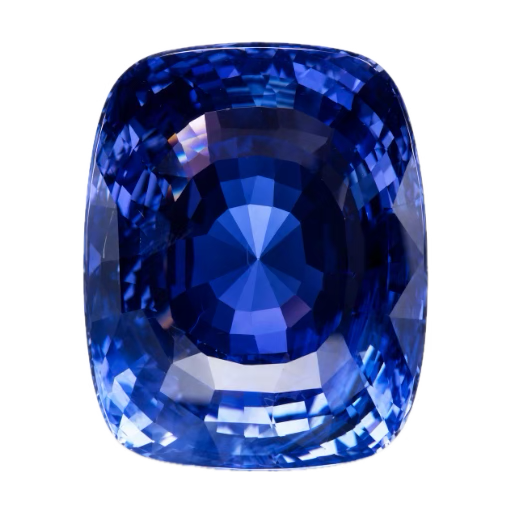
Corundum is aluminum oxide, one of the hardest minerals, at 9 on the Mohs scale. Its gem varieties are ruby and sapphire.
How to identify corundum
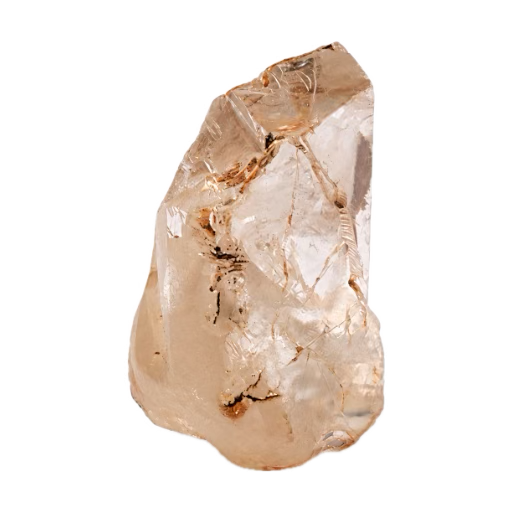
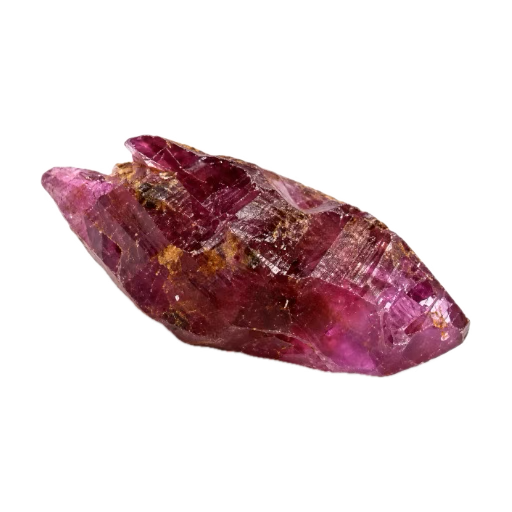
Barrel-shaped or tapering six-sided crystals, often gray, brown or dull blue in common material. It is very heavy for its size and scratches quartz and steel with ease. Faces often show fine parallel lines.
Real or fake corundum: common imitations
- Quartz
- Noticeably lighter, and corundum scratches it. Quartz crystals also lack the barrel shape.
- Synthetic corundum
- Chemically identical and widely sold as ruby or sapphire. Curved growth lines or round bubbles under a loupe give it away.
How much is corundum worth?
At average quality, a walnut-sized rough piece (about 59 g) is worth $3 to $9; a 1 kg rough piece, $33 to $85; a 1-carat cut stone, $33 to $75.
| Specimen | Ordinary | Average | Fine |
|---|---|---|---|
| Rough piece, walnut-sizedabout 59 g | $1 to $5 | $3 to $9 | $7 to $20 |
| Rough piece, 1 kg | $18 to $43 | $33 to $85 | $75 to $190 |
| Crystal, egg-sizedabout 198 g | $8 to $29 | $20 to $84 | $69 to $300 |
| Cut stone, 1 carat0.2 g | $20 to $41 | $33 to $75 | $66 to $150 |
Ordinary quality: dull, opaque or chipped. Fine quality: vivid color, clean and translucent stone.
Ordinary corundum, gray, brown or dull, opaque blue, is worth little: ground to powder, it is mostly used as an abrasive, like emery. Everything changes with gem quality: a vivid color and transparency make it a ruby or a sapphire, judged on a different scale. Sharp, intact barrel-shaped crystals can interest a collector. Synthetic corundum, chemically identical, is worth far less than a natural stone of the same appearance.
These figures are orders of magnitude from Kaillou’s calculator: an estimate, not an appraisal. For a piece that looks exceptional, ask a gemologist. How the calculator works.
Where to find corundum
In mica schist, gneiss, marble and some igneous rocks, and in river and beach sands. Gem material comes mainly from Asia and East Africa, and emery from Greece.
In the Massif central, in central France, there are small deposits, known mostly as mineralogical curiosities. At Mont Coupet, a volcano in the Haute-Loire 5 km northeast of Langeac, sapphire mining began around 1855: some 10,000 carats are said to have come out in the first six months alone. Sapphires are also known at the Menoyre dome, near Menet, in the Cantal, and in the alluvium of the Sioulot, in the Mont-Dore massif. These sapphires are of gem quality, but too small for jewelry.
Corundum history
Its name comes from a Tamil word for ruby and sapphire. The first synthetic rubies were made in 1837, and Verneuil announced his flame-fusion process in 1902, and it was soon used on an industrial scale.