Kaillou


Zircon
Zircon is zirconium silicate, a hard mineral that also serves as a gem. It is not related to cubic zirconia, a man-made stone.
How to identify zircon
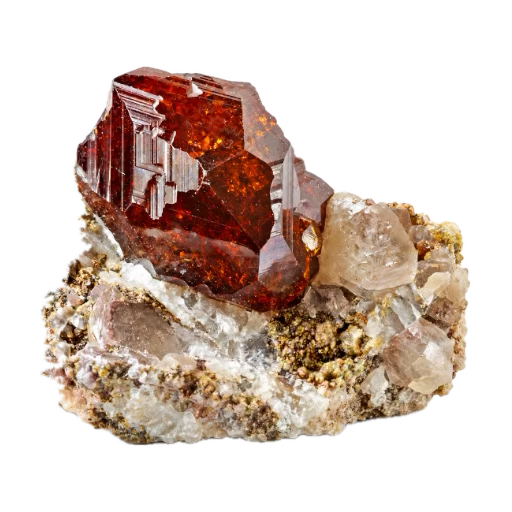
Square-sided prisms with pyramid tips, in brown, red, yellow, green or colorless. The shine is brilliant and almost diamond-like, and it is very heavy for its size.
Real or fake zircon: common imitations
- Cubic zirconia
- A lab-made stone, heavier still. Zircon shows doubled back edges, while cubic zirconia does not.
- Diamond
- Zircon is softer and shows doubled back edges when viewed through the top.
- Heat-treated zircon
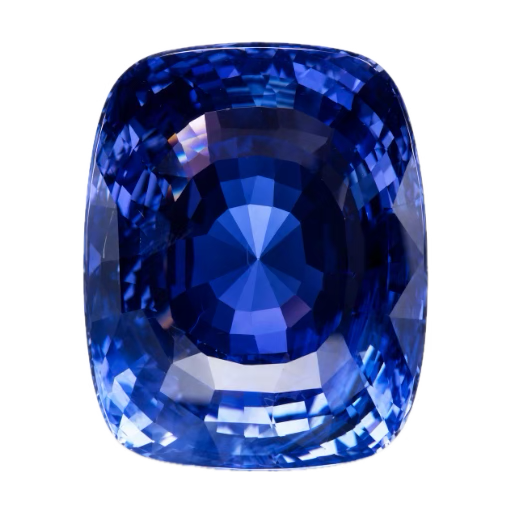
- Blue and colorless stones are usually made by heating brown zircon.
How much is zircon worth?
At average quality, a walnut-sized rough piece (about 69 g) is worth $8 to $22; a 1 kg rough piece, $71 to $190; a 1-carat cut stone, $44 to $94.
| Specimen | Ordinary | Average | Fine |
|---|---|---|---|
| Rough piece, walnut-sizedabout 69 g | $4 to $11 | $8 to $22 | $18 to $49 |
| Rough piece, 1 kg | $39 to $90 | $71 to $190 | $160 to $420 |
| Crystal, egg-sizedabout 230 g | $19 to $68 | $47 to $200 | $160 to $700 |
| Cut stone, 1 carat0.2 g | $28 to $54 | $44 to $94 | $85 to $180 |
Ordinary quality: dull, opaque or chipped. Fine quality: vivid color, clean and translucent stone.
Blue dominates the market: it makes up the great majority of sales and sells for more, even though this color almost always comes from heating. Transparency, the absence of visible inclusions and the quality of the cut follow, the cut being delicate because the stone is brittle. Large blue stones are rare. The zircons found in France today, in small grains, are mostly a mineralogical curiosity.
These figures are orders of magnitude from Kaillou’s calculator: an estimate, not an appraisal. For a piece that looks exceptional, ask a gemologist. How the calculator works.
Where to find zircon
As small grains in granite and other rocks, and in beach and river sands. Cambodia, Sri Lanka, Myanmar and Australia are known sources.
The Velay, in the Haute-Loire in central France, has a long history of zircon: its red zircons were called hyacinths. The Riou Pezzouliou, a stream in Espaly-Saint-Marcel whose gems come from the Croustet volcano, yielded mostly sapphires and zircons, and its resources have been known since at least the 13th century. Sapphires, garnets and hyacinths from the Velay joined the treasures of the papacy, the Abbey of Saint-Denis and the kings of France. Mined extensively until the early 20th century, these deposits are now almost exhausted.
Good to know
Some stones hold traces of uranium and thorium. The radiation is weak, but over time it can damage the crystal, leaving the stone duller and softer.
Zircon history and lore
The name comes from a Persian word meaning gold-colored, and red-orange stones were once called hyacinth. Tiny zircon crystals from Western Australia, about 4.4 billion years old, are among the oldest minerals found on Earth.
One of the birthstones of December.