Kaillou

Prasiolite
Prasiolite is the green variety of quartz, colored by iron. Natural prasiolite is very rare, and most of what is sold is made by heating amethyst.
How to identify prasiolite
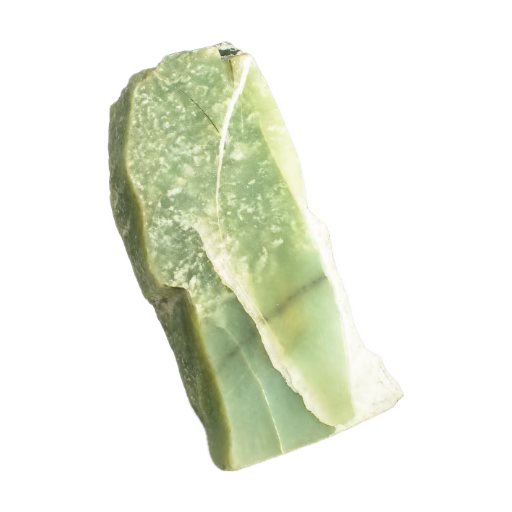
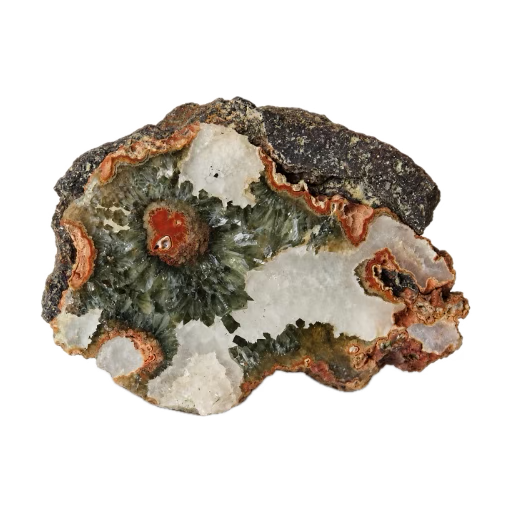
Pale leek green to yellowish green, transparent and glassy, usually as cut stones. It is hard enough to scratch glass and has no cleavage.
Real or fake prasiolite: common imitations
- Heat-treated amethyst
- Most prasiolite is this. It is real quartz, but the green color was produced by heating.
- Green glass
- Shows round bubbles and scratches easily.
- Green fluorite
- Much softer and splits along flat cleavage planes.
How much is prasiolite worth?
At average quality, a walnut-sized rough piece (about 40 g) is worth $1 to $3; a 1 kg rough piece, $18 to $36; a 1-carat cut stone, $6 to $12.
| Specimen | Ordinary | Average | Fine |
|---|---|---|---|
| Rough piece, walnut-sizedabout 40 g | $1 to $2 | $1 to $3 | $2 to $5 |
| Rough piece, 1 kg | $12 to $23 | $18 to $36 | $33 to $64 |
| Crystal, egg-sizedabout 133 g | $4 to $12 | $8 to $27 | $23 to $74 |
| Cut stone, 1 carat0.2 g | $4 to $8 | $6 to $12 | $11 to $20 |
Ordinary quality: dull, opaque or chipped. Fine quality: vivid color, clean and translucent stone.
Color is the main factor determining the price: a rich, saturated green is worth more than the very pale green common on the market. Next come clarity, cut quality and weight. Almost all the prasiolite sold is heated amethyst or irradiated quartz: this is the market norm. A natural stone is rare, and a lab analysis helps establish it. The name “green amethyst” is considered incorrect. Synthetic quartz or green glass imitate it.
These figures are orders of magnitude from Kaillou’s calculator: an estimate, not an appraisal. For a piece that looks exceptional, ask a gemologist. How the calculator works.
Where to find prasiolite
Natural deposits are small and include Lower Silesia in Poland, Bahia in Brazil, Thunder Bay in Canada and Namibia. Heated stones mostly come from amethyst of the Montezuma mine in Brazil.
Good to know
Strong sunlight or heat can fade or change the color.
Prasiolite history
Natural prasiolite turned up in Lower Silesia early in the 19th century. Large-scale production began in the 1950s, once amethyst from one Brazilian mine was found to turn green when heated.