Kaillou


Aragonite
Aragonite is a form of calcium carbonate with a different crystal structure from calcite. It builds mollusk shells, corals and many cave formations.
How to identify aragonite
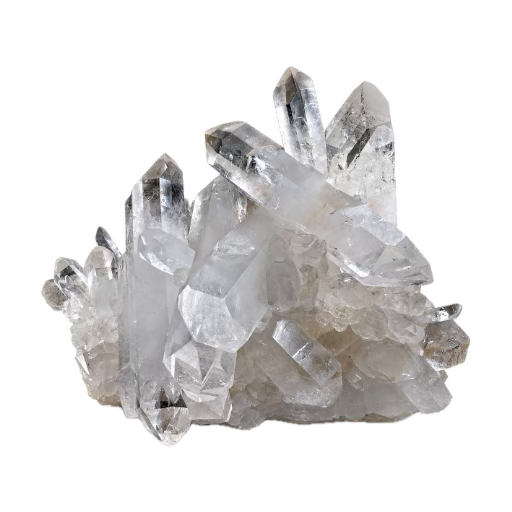
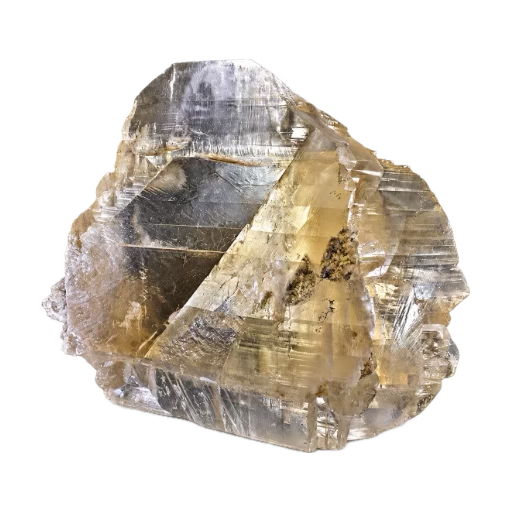
White, colorless or pale yellow needles and columns, often in radiating sprays or in six-sided looking twins. It may also form branching coral-like growths. It is slightly harder than calcite and scratched by a steel knife.
Real or fake aragonite: common imitations
How much is aragonite worth?
At average quality, a walnut-sized rough piece (about 44 g) is worth $1 to $2; a 1 kg rough piece, $11 to $23; an egg-sized crystal (about 147 g), $5 to $19.
| Specimen | Ordinary | Average | Fine |
|---|---|---|---|
| Rough piece, walnut-sizedabout 44 g | $1 to $2 | $1 to $2 | $1 to $4 |
| Rough piece, 1 kg | $7 to $14 | $11 to $23 | $20 to $42 |
| Crystal, egg-sizedabout 147 g | $2 to $8 | $5 to $19 | $15 to $52 |
Ordinary quality: dull, opaque or chipped. Fine quality: vivid color, clean and translucent stone.
A fragment of white crust or concretion finds no buyer: the prices in the table are those of specimens sold in shops. Everything hinges on crystals: sharp hexagonal-looking twins, intact sprays of needles or a finely branched coral-like form, with no breakage. Provenance also counts, Molina de Aragón foremost. Mother-of-pearl and pearls are made of aragonite, but their price is that of the pearl, not of the mineral.
These figures are orders of magnitude from Kaillou’s calculator: an estimate, not an appraisal. For a piece that looks exceptional, ask a gemologist. How the calculator works.
Where to find aragonite
In caves, hot springs, gypsum beds and iron mines, and in the shells of marine animals. The mineral is named after Molina de Aragón in Spain, and the seabed of the Bahamas holds vast sands of it.
In France, it is seen mostly underground. The Clamouse cave, at Saint-Jean-de-Fos, in the Hérault, near Saint-Guilhem-le-Désert, was explored from 1945 by cavers from Montpellier and has welcomed visitors since 1964. Its upper level is renowned for its fine white crystallizations of calcite and aragonite, including aragonite “flowers” linked to the magnesium of the dolomitic rock. Specimens are also reported from the Salsigne mine, in the Aude.
Good to know
It reacts with acids, including vinegar, which etch the surface.
Aragonite history
José Torrubia described the Spanish crystals in 1754. Abraham Werner named the mineral in 1797 after the region where he thought they came from.