Kaillou


Albite
Albite is the sodium end member of the plagioclase feldspars, a sodium aluminum silicate. Its name comes from the Latin word for white.
How to identify albite
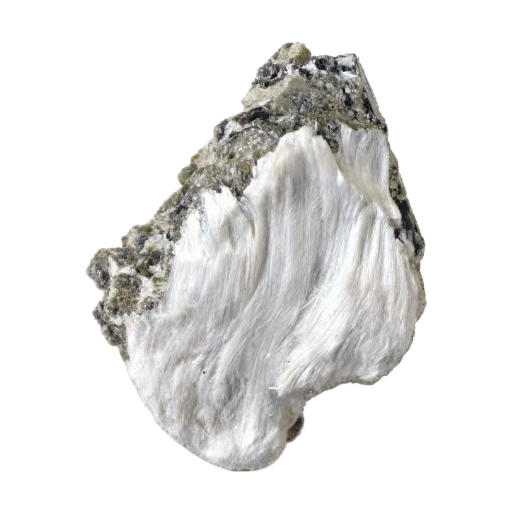
White to gray, sometimes bluish or greenish, with a glassy to pearly shine. Crystals are blocky or flat, with fine parallel lines on one face and flat shiny cleavage surfaces. A steel knife does not scratch it.
Real or fake albite: common imitations
- Quartz
- Harder, with no flat cleavage surfaces and no fine parallel lines. It breaks with curved scars.
- Potassium feldspar
- Often pink or white, but without the fine parallel lines of albite.
How much is albite worth?
At average quality, a walnut-sized rough piece (about 39 g) is worth $1 to $2; a 1 kg rough piece, $11 to $21; an egg-sized crystal (about 130 g), $4 to $15.
| Specimen | Ordinary | Average | Fine |
|---|---|---|---|
| Rough piece, walnut-sizedabout 39 g | under $1 | $1 to $2 | $1 to $3 |
| Rough piece, 1 kg | $7 to $13 | $11 to $21 | $18 to $35 |
| Crystal, egg-sizedabout 130 g | $2 to $7 | $4 to $15 | $13 to $40 |
Ordinary quality: dull, opaque or chipped. Fine quality: vivid color, clean and translucent stone.
A white albite in a granite or pegmatite finds no buyer: it is one of the most common minerals. Everything depends on the crystals: sharpness, brilliance, intact edges and locality, such as Alpine clefts. It also gains value when it accompanies fine minerals such as tourmaline or epidote. Peristerite, a variety with iridescent reflections sometimes called “albite moonstone,” is judged by the intensity of its sheen.
These figures are orders of magnitude from Kaillou’s calculator: an estimate, not an appraisal. For a piece that looks exceptional, ask a gemologist. How the calculator works.
Where to find albite
Very common in granite, pegmatites and many metamorphic rocks worldwide. Fine crystals come from pegmatites in Brazil and from alpine fissures in Switzerland.
Albite is a common component of granites and pegmatites, and its finest crystals in France are found in the Alps. The Roc Tourné, near Modane, in Savoie, is among the localities of fine crystals cited in mineralogy books, and a feldspar twin law bears the same name. In the Hautes-Alpes, it is reported at Le Queyron, in Saint-Véran, and at Mont-Cruzeau, in Montgenèvre. In Brittany, a bladed variety, cleavelandite, is reported in quarries near Gouesnach and Bénodet, in the Finistère.
Albite history
Named for its typical white color. It belongs to the feldspars, the most abundant group of minerals in the Earth's crust.