Kaillou


Soapstone
Soapstone is a soft metamorphic rock made mostly of talc, often with some chlorite and carbonate minerals. People have carved it for thousands of years.
How to identify soapstone
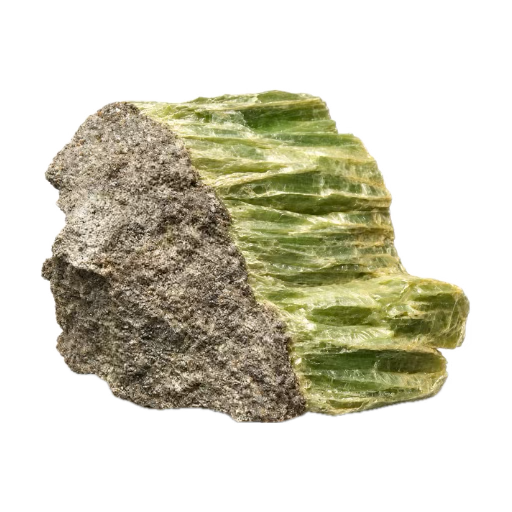
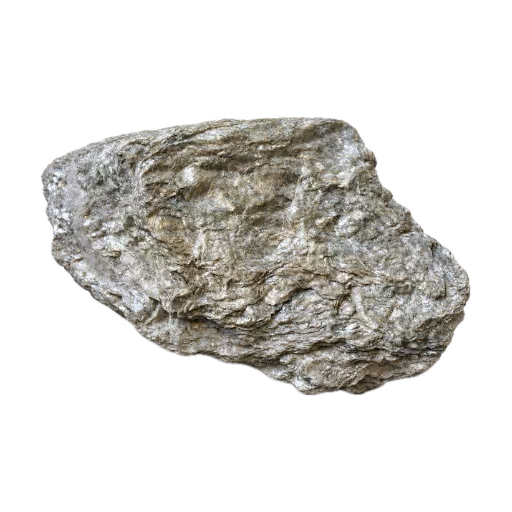
Gray, green or brown with a smooth, soapy feel and a dull, satiny finish. Talc-rich pieces are easy to scratch with a fingernail and leave a pale mark. It is dense and cool to the touch.
Real or fake soapstone: common imitations
- Serpentine
- Often carved and sold as soapstone. It feels waxy rather than soapy and is usually harder than a fingernail.
- Pyrophyllite
- A soft, soapy carving stone from China, also sold under the name soapstone. A laboratory test is needed to tell them apart.
How much is soapstone worth?
At average quality, a walnut-sized rough piece (about 39 g) is worth under $1; a 1 kg rough piece, $5 to $10.
| Specimen | Ordinary | Average | Fine |
|---|---|---|---|
| Rough piece, walnut-sizedabout 39 g | under $1 | under $1 | $1 to $2 |
| Rough piece, 1 kg | $3 to $7 | $5 to $10 | $9 to $17 |
Ordinary quality: dull, opaque or chipped. Fine quality: vivid color, clean and translucent stone.
A piece of soapstone picked up off the ground finds no buyer: the few dollars in the table match the price of a labeled sample sold in a shop. The value comes from the work: the price of a sculpture, bowl or stove reflects the finished object and the artisan’s craftsmanship, not the rock. Many sculptures sold under this name are in fact serpentine or pyrophyllite.
These figures are orders of magnitude from Kaillou’s calculator: an estimate, not an appraisal. For a piece that looks exceptional, ask a gemologist. How the calculator works.
Where to find soapstone
In mountain belts, where magnesium-rich rock has been altered by heat and fluids. Brazil, Finland, India, China and the Appalachians in the United States have well-known quarries.
In the Hautes-Alpes, the soapstone of the Valgaudemar was intensively worked in the Final Neolithic. A 2024 study identifies this area as the source of the soapstone beads from southern France dating from 3400 to 2400 BC. In the Ariège, the Trimouns quarry, between 1,650 and 1,800 meters above sea level, in the communes of Lordat, Vernaux, Bestiac and Montségur, extracts talc-chlorite. It is one of the largest quarries of its kind in the world.
Good to know
Dust from cutting or sanding is harmful to breathe, and wet work with a mask reduces the risk.
Soapstone history
Carved for thousands of years into bowls, seals and figures, and by Inuit artists into lamps and sculpture. It holds heat well, so it has also been used for stoves, cookware and countertops.