Kaillou

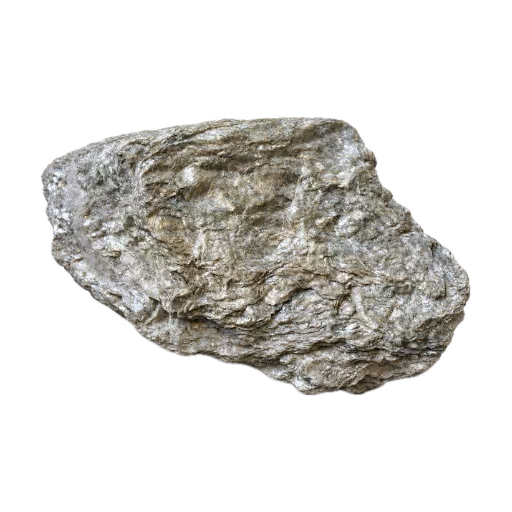
Schist
Schist is a medium-grained metamorphic rock rich in flat minerals such as mica, which line up and make it split into thin plates. It forms when mountain building heats and squeezes rocks such as shale.
How to identify schist
Glittering flakes of mica on the surface and wavy layers along which the rock splits easily. The color is silvery gray, green or brown, and larger crystals such as garnet may be scattered through it. A hand lens shows the grains.
How much is schist worth?
At average quality, a walnut-sized rough piece (about 41 g) is worth under $1; a 1 kg rough piece, $7 to $12.
| Specimen | Ordinary | Average | Fine |
|---|---|---|---|
| Rough piece, walnut-sizedabout 41 g | under $1 | under $1 | $1 to $2 |
| Rough piece, 1 kg | $6 to $9 | $7 to $12 | $10 to $16 |
Ordinary quality: dull, opaque or chipped. Fine quality: vivid color, clean and translucent stone.
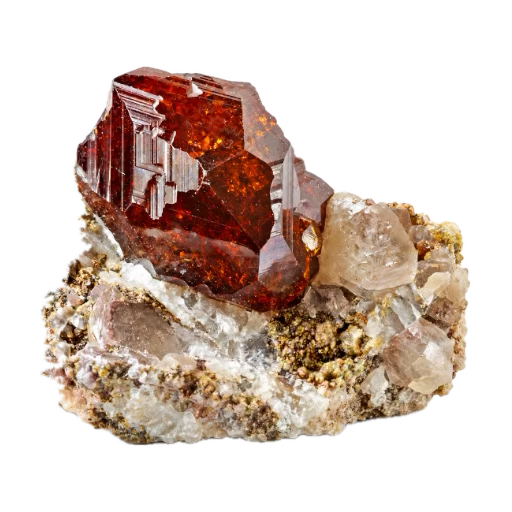
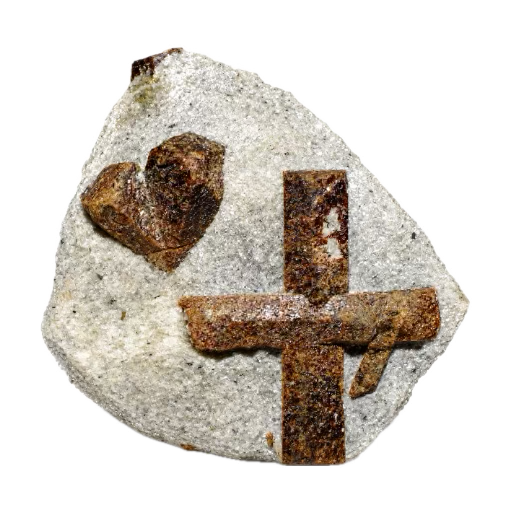
A piece of schist picked up from the ground finds no buyer: the prices in the table are those of specimens sold in shops. Schist is used mostly as a local building or paving stone. What can interest a collector are the crystals it contains: well-formed garnets or cross-shaped staurolites, intact and well exposed, especially if they come from a known locality.
These figures are orders of magnitude from Kaillou’s calculator: an estimate, not an appraisal. For a piece that looks exceptional, ask a gemologist. How the calculator works.
Where to find schist
In mountain belts and the eroded roots of old mountains, such as the Alps, the Scottish Highlands and the Appalachians.
In France, the island of Groix, in the Morbihan in Brittany, is one of the French mineral sites of international importance. Its rocks are mostly mica schists, with greenschists and glaucophane-bearing blueschists that provide rare evidence of an ancient subduction zone. More than sixty minerals have been described there, and garnet colors the sand at the top of some beaches. Around the Pointe des Chats, the François-Le-Bail nature reserve has protected this heritage since 1982: it is not a place for collecting.
Schist history
The name comes from a Greek verb meaning to split, a reference to how easily it separates into layers. Those weak layers make it a difficult rock for engineers to build on.