Kaillou


Demantoid
Demantoid is the green gem variety of andradite, a calcium iron garnet. Its name refers to its diamond-like fire and shine.
How to identify demantoid
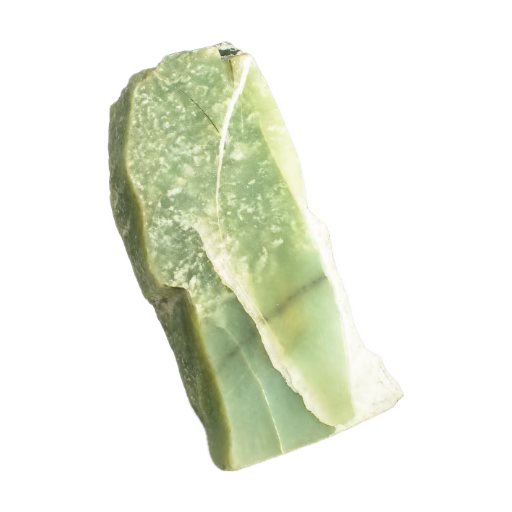
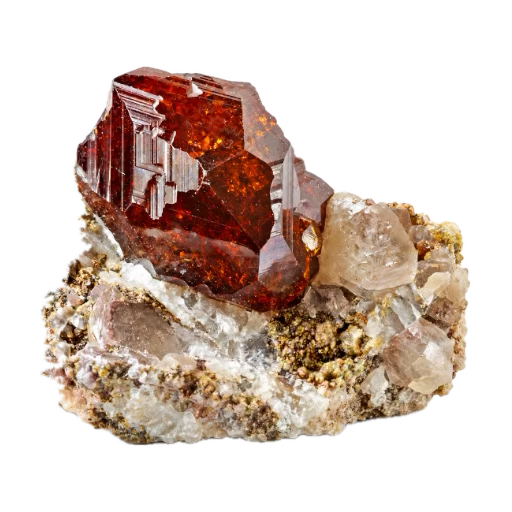
Bright green to yellow-green with a sharp, diamond-like shine and strong flashes of color. Many stones contain fine curved fibers called horsetails. It scratches more easily than most gems.
Real or fake demantoid: common imitations
How much is demantoid worth?
At average quality, a walnut-sized rough piece (about 58 g) is worth $110 to $290; a 1 kg rough piece, $1,100 to $2,900; a 1-carat cut stone, $480 to $1,100.
| Specimen | Ordinary | Average | Fine |
|---|---|---|---|
| Rough piece, walnut-sizedabout 58 g | $64 to $150 | $110 to $290 | $250 to $650 |
| Rough piece, 1 kg | $630 to $1,500 | $1,100 to $2,900 | $2,500 to $6,400 |
| Crystal, egg-sizedabout 192 g | $260 to $940 | $650 to $2,800 | $2,200 to $9,500 |
| Cut stone, 1 carat0.2 g | $300 to $590 | $480 to $1,100 | $930 to $2,000 |
Ordinary quality: dull, opaque or chipped. Fine quality: vivid color, clean and translucent stone.
Color accounts for most of the price: an intense, pure green is worth more than a yellowish or brownish green. The stones are almost always small, so the price climbs sharply with weight. The “horsetail” inclusions typical of Russian stones can add to the value. Some Ural stones are heated to remove a brown tint. An opaque or cracked fragment of andradite has no gem value.
These figures are orders of magnitude from Kaillou’s calculator: an estimate, not an appraisal. For a piece that looks exceptional, ask a gemologist. How the calculator works.
Where to find demantoid
In altered serpentine rocks and skarns. The classic source is the Ural Mountains of Russia, with others in Namibia, Madagascar and Iran.
Good to know
It is softer than most gems, so it can scratch or chip with rough wear.
Demantoid history
It was first found around 1853 in river deposits in the Urals, in Russia. Russian jewelers, including the House of Fabergé, later used it.