Kaillou


Citrine
Citrine is the yellow variety of quartz, whose name comes, by way of the French word for lemon, from the Latin citrus. Natural citrine is rare, and most of what is sold comes from heated amethyst or smoky quartz.
How to identify citrine
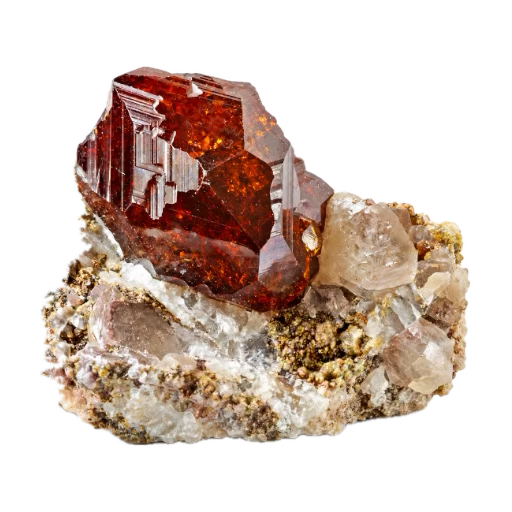
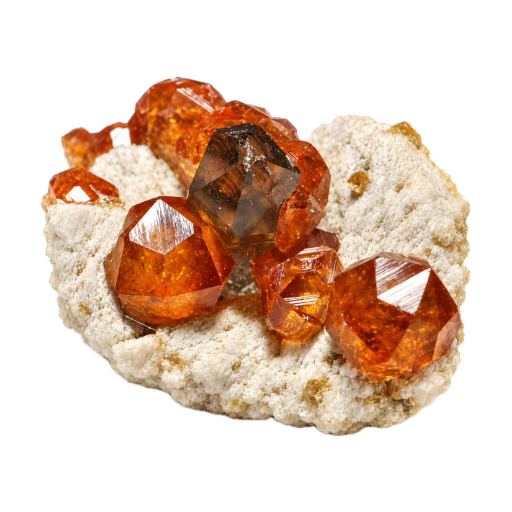
Clear six-sided crystals in pale yellow to orange-brown. Heated amethyst is often a deeper orange-brown, with a whitish base. It is hard enough to scratch glass.
Real or fake citrine: common imitations
- Heat-treated amethyst
- Common and sold as citrine. Deep orange-brown stones with a reddish tint are usually of this origin.
- Yellow topaz
- Sometimes sold under names such as Madeira topaz for citrine. True topaz is heavier and harder.
- Glass
- Shows round bubbles and feels warmer to the touch than quartz.
How much is citrine worth?
At average quality, a walnut-sized rough piece (about 40 g) is worth $2 to $7; a 1 kg rough piece, $33 to $85; a 1-carat cut stone, $11 to $25.
| Specimen | Ordinary | Average | Fine |
|---|---|---|---|
| Rough piece, walnut-sizedabout 40 g | $1 to $4 | $2 to $7 | $5 to $15 |
| Rough piece, 1 kg | $18 to $43 | $33 to $85 | $75 to $190 |
| Crystal, egg-sizedabout 133 g | $6 to $22 | $15 to $64 | $52 to $220 |
| Cut stone, 1 carat0.2 g | $6 to $14 | $11 to $25 | $22 to $49 |
Ordinary quality: dull, opaque or chipped. Fine quality: vivid color, clean and translucent stone.
Color drives most of the price: a saturated yellow to reddish orange, with no brownish tint, is the most sought after. Clarity, the absence of color zoning and the quality of the cut follow. Most citrine on the market is heated amethyst: a natural citrine may interest a collector, but telling them apart often takes a laboratory. A quartz merely stained with rust on the surface is not citrine and finds no buyer.
These figures are orders of magnitude from Kaillou’s calculator: an estimate, not an appraisal. For a piece that looks exceptional, ask a gemologist. How the calculator works.
Where to find citrine
In quartz veins and cavities. Brazil is the leading source, with others in Bolivia and Madagascar.
Citrine history and lore
Yellow quartz has been used as a gem since antiquity. Its sales grew in recent decades through marketing and earth-tone fashion.
Birthstone of November, with topaz.