Kaillou


Chrysoprase
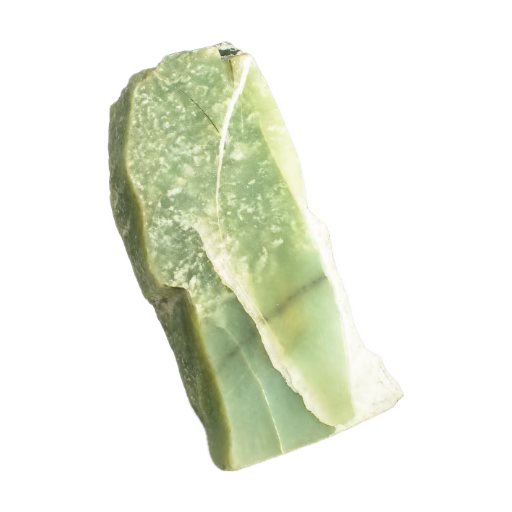
Chrysoprase is a variety of chalcedony, a microcrystalline quartz, colored apple green by small amounts of nickel. It is the most valued green chalcedony.
How to identify chrysoprase
Even apple green, translucent, with a smooth waxy shine and no banding. It is hard enough to scratch glass. Darker stones appear deep green in thick pieces.
Real or fake chrysoprase: common imitations
- Dyed chalcedony
- Often too bright or blue-green. Color concentrated in cracks suggests dye.
- Jade
- Heavier and tougher, with a more fibrous texture.
How much is chrysoprase worth?
At average quality, a walnut-sized rough piece (about 39 g) is worth $6 to $17; a 1 kg rough piece, $89 to $230; an egg-sized crystal (about 129 g), $39 to $170.
| Specimen | Ordinary | Average | Fine |
|---|---|---|---|
| Rough piece, walnut-sizedabout 39 g | $3 to $9 | $6 to $17 | $14 to $38 |
| Rough piece, 1 kg | $50 to $120 | $89 to $230 | $200 to $510 |
| Crystal, egg-sizedabout 129 g | $16 to $57 | $39 to $170 | $130 to $580 |
Ordinary quality: dull, opaque or chipped. Fine quality: vivid color, clean and translucent stone.
The price depends mostly on color: a vivid, deep apple green that lets light through well is worth clearly more than a pale or yellowish green. Many ordinary chalcedonies and agates are dyed green and sold under this name. True chrysoprase often varies a little in shade: beads that are all perfectly identical are a sign of dyeing. A pale, dull fragment resells for little.
These figures are orders of magnitude from Kaillou’s calculator: an estimate, not an appraisal. For a piece that looks exceptional, ask a gemologist. How the calculator works.
Where to find chrysoprase
In weathered rock rich in nickel. Australia is the main source today, and Poland has supplied it for centuries.
Good to know
The color can fade if the stone dries out or sits in strong sun.
Chrysoprase history
The name comes from the Greek for golden leek. It has been cut as a gem since classical times.