Kaillou


Dolomite
Dolomite is a carbonate mineral of calcium and magnesium. It also names a rock made mostly of it, and the Dolomites mountains in Italy are built from that rock.
How to identify dolomite
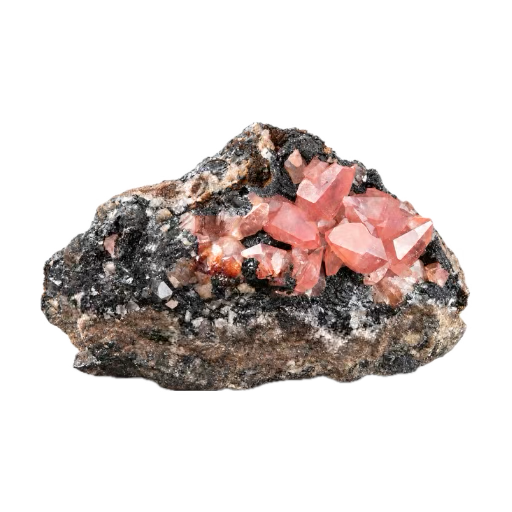
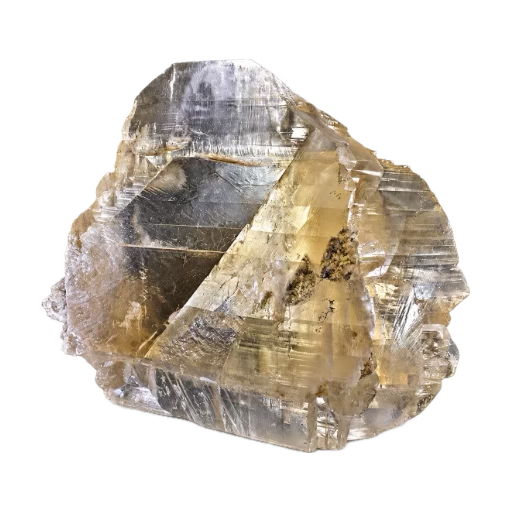
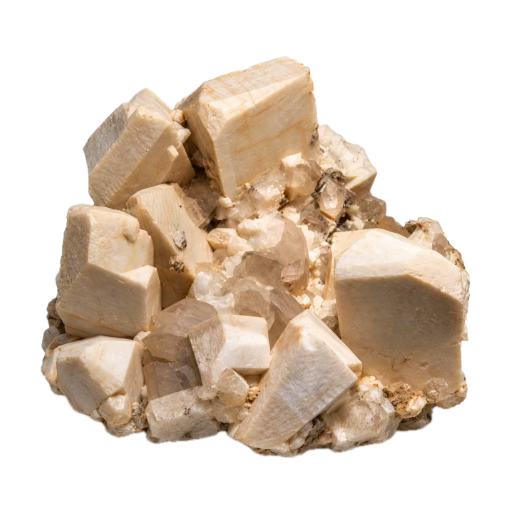
Pinkish white to gray, often in pearly crystals with slightly curved faces. It is slightly harder than calcite, and a copper coin does not scratch it. Dilute acid barely fizzes on a solid piece.
Real or fake dolomite: common imitations
- Calcite
- Softer, and it fizzes right away in vinegar or dilute acid.
- Ankerite
- A close relative holding iron, usually browner or yellowish.
How much is dolomite worth?
At average quality, a walnut-sized rough piece (about 43 g) is worth $1 to $2; a 1 kg rough piece, $6 to $14; an egg-sized crystal (about 142 g), $3 to $11.
| Specimen | Ordinary | Average | Fine |
|---|---|---|---|
| Rough piece, walnut-sizedabout 43 g | under $1 | $1 to $2 | $1 to $2 |
| Rough piece, 1 kg | $4 to $9 | $6 to $14 | $12 to $25 |
| Crystal, egg-sizedabout 142 g | $1 to $5 | $3 to $11 | $9 to $30 |
Ordinary quality: dull, opaque or chipped. Fine quality: vivid color, clean and translucent stone.
A piece of dolostone picked up from the ground finds no buyer: the prices in the table are those of specimens sold in shops. The crushed rock is sold by the metric ton for soil conditioning and for use in glass, steel or ceramics. For a collector, what matters is well-exposed, sharply defined rhombohedral crystals with curved, pearly faces, sometimes pink, along with a well-regarded locality. A chipped or dull crystal quickly loses its appeal.
These figures are orders of magnitude from Kaillou’s calculator: an estimate, not an appraisal. For a piece that looks exceptional, ask a gemologist. How the calculator works.
Where to find dolomite
In sedimentary rocks worldwide, in veins with metal ores, and in the Dolomites of northern Italy.
In France, the mineral is named after Déodat de Dolomieu, born in 1750 in Dolomieu, in the Isère département. Dolomite rock, made mostly of the mineral dolomite, carves famous ruin-like landscapes on the Causses of southern France: the Montpellier-le-Vieux chaos on the Causse Noir, at La Roque-Sainte-Marguerite, in the Aveyron, a protected natural site open to visitors; Nîmes-le-Vieux on the Causse Méjean; and the Cirque de Mourèze, in the Hérault. The Trimouns talc quarry, above Luzenac, in the Ariège, has yielded fine dolomite crystals associated with talc.
Dolomite history
Named for French geologist Déodat de Dolomieu, who described the rock in 1791. The mountain range was later named after the same rock.