Kaillou


Apache tears
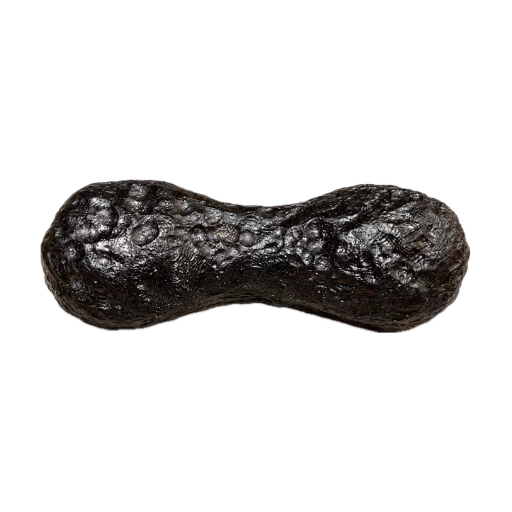
Apache tears are small, rounded nuggets of obsidian, a natural volcanic glass. Geologists call them marekanite, and they typically sit inside a gray glass-rich rock called perlite.
How to identify Apache tears
Dark brown to black pebbles up to about two inches across, with dented surfaces. They look black in reflected light, but thin edges glow smoky brown when held up to a lamp.
Real or fake Apache tears: common imitations
- Black glass
- Man-made beads and tumbled glass may look the same. Glass often contains round bubbles and glows evenly, with no smoky brown tone.
How much are Apache tears worth?
At average quality, a walnut-sized rough piece (about 35 g) is worth $1 to $3; a 1 kg rough piece, $18 to $33.
| Specimen | Ordinary | Average | Fine |
|---|---|---|---|
| Rough piece, walnut-sizedabout 35 g | $1 to $2 | $1 to $3 | $2 to $4 |
| Rough piece, 1 kg | $13 to $22 | $18 to $33 | $30 to $54 |
Ordinary quality: dull, opaque or chipped. Fine quality: vivid color, clean and translucent stone.
The price depends on a few factors: size, a nicely rounded shape, a surface free of chips, and above all the smoky brown transparency revealed when the stone is held up to the light. They are sold mostly tumbled and polished, or set in jewelry, where the work and the setting count for more than the stone. An ordinary rounded stone has value mainly as a keepsake. Black glass can look like them, and is worth even less.
These figures are orders of magnitude from Kaillou’s calculator: an estimate, not an appraisal. For a piece that looks exceptional, ask a gemologist. How the calculator works.
Where to find Apache tears
In volcanic deposits of the dry western United States, such as Arizona, New Mexico and Nevada. They weather out of the surrounding perlite and collect on the ground.
Apache tears history and lore
Obsidian has been used for tools and blades for a very long time. Today the polished pebbles are sold as tumbled stones and set in jewelry.
A popular legend says Apache warriors rode off a cliff rather than surrender, and the women's tears turned to stone where they fell.